
You’ve probably stood in a drugstore aisle staring at a wall of whitening strips, gels, and trays wondering whether any of them actually work. Maybe you’ve already tried a few and noticed your teeth look one shade lighter — if you squint. If you’re in Madison Heights or Troy and want a noticeably brighter smile, here’s exactly what separates professional whitening from the at-home options crowding store shelves in 2026.
Why Teeth Stain in the First Place
It helps to understand what you’re actually dealing with before comparing methods. Tooth discoloration comes in two forms: extrinsic and intrinsic.
Extrinsic stains sit on the outer enamel surface. Coffee, tea, red wine, and tobacco are the usual culprits, and these respond well to whitening because the bleaching agents can reach the stain directly.
Intrinsic stains go deeper, embedded within the tooth structure itself. They develop from aging, certain medications like tetracycline, fluorosis, or past dental trauma. This type of discoloration is harder to treat and sometimes calls for a different cosmetic approach entirely — veneers or bonding, for example.
Knowing which type you have matters before you spend a dollar on any whitening product.
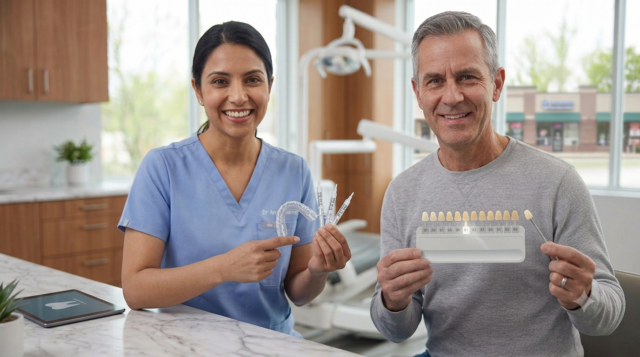
At-Home Whitening: What’s Actually Available in 2026
The at-home whitening market has expanded considerably, and the options range from barely effective to reasonably useful. Here’s a clear-eyed look at each.
Whitening Strips
Over-the-counter strips typically use hydrogen peroxide or carbamide peroxide at concentrations between 3% and 10%. They’re convenient, inexpensive, and do produce some visible results on surface stains after consistent use over two to four weeks.
The downsides are real, though: uneven application, sensitivity for many users, and limited contact time with the tooth surface. Strips also don’t conform well to the natural contours of your teeth, which often leaves the edges near your gums untreated.
Whitening Toothpastes
These work mainly through mild abrasives that scrub away surface stains rather than bleaching the enamel. Most contain very little peroxide, if any. They’re fine for maintenance after a whitening treatment but won’t produce dramatic results on their own.
Whitening Trays from the Drugstore
One-size-fits-all trays with gel offer better coverage than strips, but the fit is the problem. A poorly fitting tray lets gel leak onto your gums — causing irritation — and reduces contact time on the teeth where it actually matters. Peroxide concentration is still capped by over-the-counter regulations.
LED Whitening Kits
These have become popular, largely through social media. The light is marketed as accelerating the bleaching process, but the research on consumer-grade LED devices is mixed. The light itself doesn’t whiten teeth — the peroxide gel does. If the gel concentration is low, the light doesn’t make up for it.
Professional Teeth Whitening: What’s Different
Professional whitening uses prescription-strength bleaching agents — typically hydrogen peroxide at concentrations between 25% and 40% — applied under controlled conditions. That’s a meaningful gap from what you can buy over the counter.
In-Office Treatment
An in-office whitening session typically takes about an hour. Your gums are protected with a barrier before the gel goes on, which addresses one of the most common complaints about at-home kits. The dentist monitors the process throughout and can adjust as needed.
Results are visible the same day. Most patients see a lift of several shades in a single appointment. For anyone with significant staining or a specific event on the calendar, in-office treatment is the most direct route.
Custom Take-Home Trays from Your Dentist
This is a different product than what you’ll find at the drugstore. A dentist takes impressions of your teeth and creates trays that fit precisely. You use a professional-grade gel at home — usually for a shorter period each day over one to two weeks. Because the tray fits correctly, the gel stays where it should and doesn’t pool on your gums.
Custom trays are often recommended as a follow-up to in-office whitening to maintain results, or as a standalone option for patients who prefer a more gradual approach.
Managing Sensitivity
Tooth sensitivity during whitening is real, and it’s one of the main reasons people abandon at-home products before they see results. With professional treatment, a dentist can assess your enamel thickness, existing restorations, and gum health before anything starts. If sensitivity is a concern, the treatment can be paced accordingly — something a drugstore kit simply can’t offer.
Side-by-Side Comparison
| Factor | At-Home Kits | Professional Whitening |
|---|---|---|
| Peroxide concentration | 3%–10% | 25%–40% |
| Custom fit | No | Yes (custom trays) |
| Gum protection | Minimal | Applied by dentist |
| Results timeline | 2–4 weeks | 1 appointment or 1–2 weeks |
| Sensitivity management | None | Dentist-guided |
| Longevity | Shorter | Longer with maintenance |
| Cost | Lower upfront | Higher upfront, better value long-term |
When At-Home Kits Make Sense
They’re not useless. If your staining is mild and you’re patient, strips or a whitening toothpaste can help maintain brightness between professional treatments. They’re also practical for touch-ups if you already have custom trays from a dentist and just need to replenish the gel.
Where they fall short is as a primary treatment for anyone with moderate to heavy staining, sensitive teeth, or a specific timeline in mind.
Whitening and Your Other Dental Work
Here’s something that often surprises people: whitening agents don’t change the color of crowns, veneers, bonding, or fillings. If you have visible restorations on your front teeth and you whiten your natural teeth, the mismatch becomes more noticeable, not less.
This is a good reason to talk to a dentist before starting any whitening treatment. A professional can look at your full smile and help you sequence things correctly. For some patients — particularly those with intrinsic discoloration or existing restorations — dental bonding or veneers are a better fit than whitening alone.
Teeth Whitening at Arch Dental in Madison Heights
At Arch Dental, teeth whitening is part of a broader cosmetic dentistry menu that includes veneers, dental bonding, smile makeovers, and Invisalign. The practice serves patients in Madison Heights and Troy, and the team approaches whitening the same way they approach everything else: your comfort comes first, not as an afterthought.
If dental anxiety has kept you from making an appointment, Arch Dental’s approach to painless dentistry is built specifically with patients like you in mind. You can learn more about what that looks like on their nervous patient page.
A whitening consultation gives you a clear picture of what’s actually achievable for your specific teeth before any treatment begins. That conversation matters — especially if you have restorations, sensitivity, or intrinsic staining that might call for a different cosmetic solution altogether.
How Long Do Results Last?
Professional whitening results typically last one to three years, depending on your diet and habits. Coffee, tea, red wine, and tobacco are the main factors that shorten results. Using a whitening toothpaste for maintenance and avoiding heavy staining foods in the days right after treatment helps extend how long your results hold.
Custom take-home trays make touch-ups simple. You already have the trays — you just need the gel.
Is Whitening Right for You?
Not everyone is an ideal candidate. Whitening works best on natural tooth enamel with extrinsic staining. It’s less effective for intrinsic discoloration and won’t work on crowns or veneers. Pregnant patients are typically advised to wait. Anyone with untreated cavities or gum disease should address those first.
A quick consultation answers all of these questions before you commit to anything.
Frequently Asked Questions
How many shades whiter can I expect from professional teeth whitening?
Results vary based on your starting shade and the type of staining involved. Extrinsic staining from coffee or tea responds well and can lift several shades in a single in-office session. Intrinsic staining responds more slowly and may require a different cosmetic approach. Your dentist can give you a realistic expectation after examining your teeth.
Does professional whitening hurt?
Some sensitivity during or after treatment is common, but it’s temporary. A dentist can take steps to minimize it based on your specific situation — adjusting concentration levels or treatment time, for example. That’s one of the main advantages over at-home kits, where there’s no one monitoring how your teeth are responding.
How long does an in-office whitening appointment take?
Most sessions take about an hour from start to finish, including preparation and gum protection. You leave with noticeably brighter teeth the same day.
Will whitening work on my crowns or veneers?
No. Whitening agents only affect natural tooth enamel. Crowns, veneers, bonding, and fillings won’t change color with whitening treatment. If you have visible restorations on your front teeth, talk to your dentist before whitening so you can plan for a consistent result across your smile.
How often can I whiten my teeth?
In-office whitening is typically done once, with touch-ups as needed over time. Over-whitening can cause enamel sensitivity and isn’t recommended. Your dentist will advise on a maintenance schedule that keeps your smile bright without overdoing it.
What’s the difference between drugstore whitening trays and custom trays from a dentist?
The fit. Drugstore trays are one-size-fits-all, which means gel can leak onto your gums and coverage is uneven. Custom trays made from impressions of your teeth hold the gel exactly where it needs to be, improving results and reducing gum irritation.
Can I whiten my teeth if I have sensitive teeth or gum issues?
Sensitivity and gum health are both things a dentist evaluates before recommending whitening. In many cases, whitening is still possible with adjustments to concentration or timing. Untreated gum disease or active cavities should be addressed first. A consultation is the right place to start.
If you’re in Madison Heights or Troy and want to see what a brighter smile actually looks like for your teeth, the team at Arch Dental is ready to help. Book a consultation directly at archdental.net — no pressure, no guesswork, just a clear conversation about your options.
