
Your teeth say something before you ever open your mouth. If staining or discoloration has been making you think twice before smiling, you’re far from alone — and you have more options than you might realize.
This guide is written for Troy, MI residents who are weighing professional teeth whitening against at-home alternatives. We’ll walk through what causes staining, how each whitening method actually works, who’s a good candidate for each, what whitening genuinely can’t fix, and why patients across the Troy area choose Arch Dental for cosmetic care.
Why Teeth Stain in the First Place
Not all discoloration comes from the same place — and that distinction matters when you’re deciding how to treat it.
Extrinsic staining lives on the outer surface of the enamel. Coffee, tea, red wine, and tobacco are the usual suspects. These surface stains tend to respond well to whitening.
Intrinsic staining starts inside the tooth. It can develop from certain antibiotics taken during childhood, excess fluoride during tooth development, or trauma that caused internal bleeding within the tooth. This kind of discoloration is harder to address with whitening alone.
Age-related discoloration is a combination of both. As enamel gradually thins over time, the naturally yellow dentin underneath becomes more visible. Whitening can help, but how much depends on how much enamel has worn away.
Knowing which type of staining you’re dealing with is exactly why a consultation is worth having before you commit to any approach.
In-Office Professional Teeth Whitening in Troy What to Expect
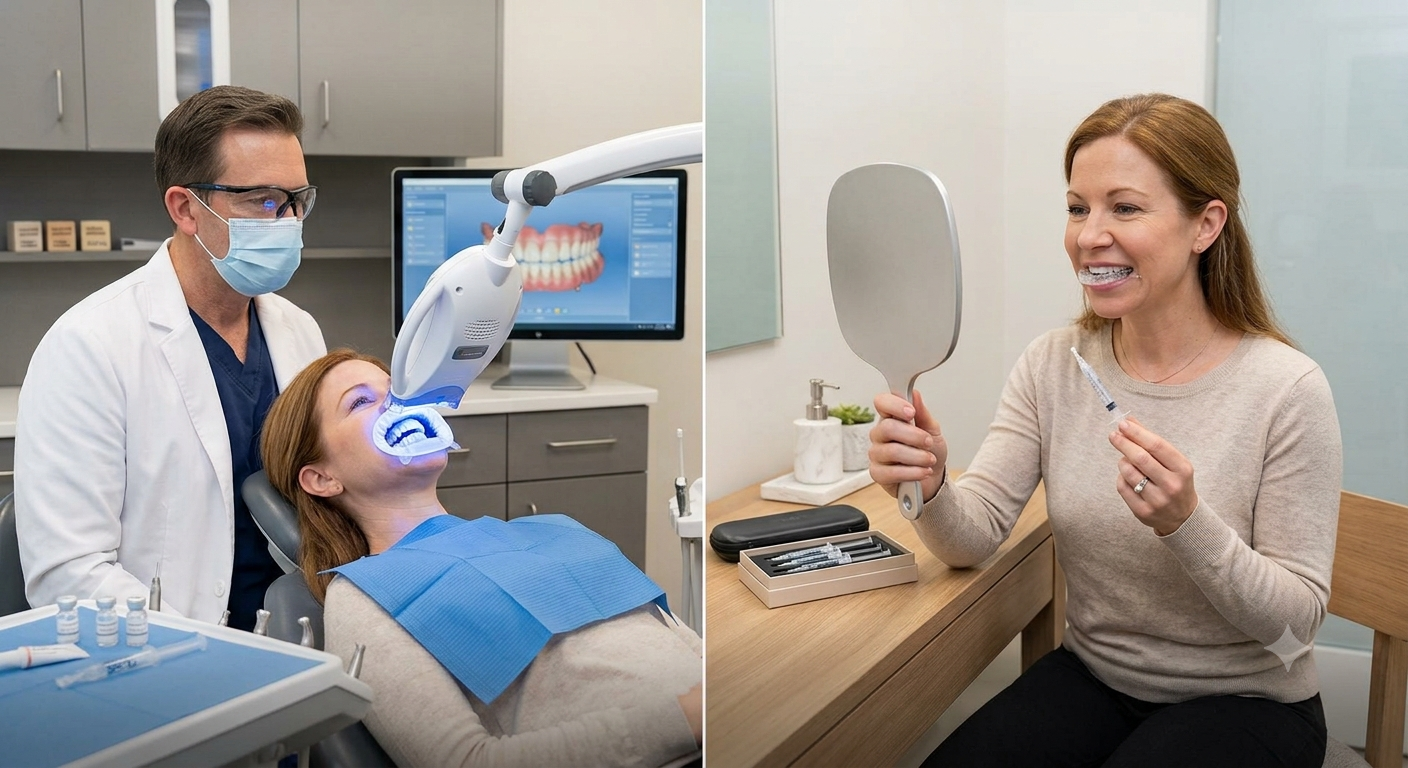
Professional whitening at a dental office delivers the most noticeable results in the shortest amount of time. Here’s how it works.
The Process
Your dentist applies a high-concentration bleaching gel directly to your teeth while protecting your gums and soft tissue throughout. The gel works over a controlled session, and most patients see a significant difference after a single appointment.
Who It’s Best For
In-office whitening is a strong fit if you:
- Have a specific event on the horizon — a wedding, reunion, or job interview
- Want the fastest possible results
- Have moderate to heavy extrinsic staining
- Prefer a supervised process over managing trays at home
- Have sensitive teeth and want a professional monitoring the treatment
What Makes It Different
The bleaching agent used in a dental office is significantly more concentrated than anything available over the counter. That’s the main reason professional results look more dramatic — and it’s also why the process should be supervised. A dentist can adjust the treatment based on how your teeth and gums are responding in real time.
Curious what professional whitening could do for your smile? Book a consultation at Arch Dental to find out.
At-Home Whitening Options: Trays vs Strips
At-home whitening isn’t a single category. There’s a real difference between dentist-provided take-home trays and the strips you pick up at a pharmacy.
Custom Take-Home Trays from Your Dentist
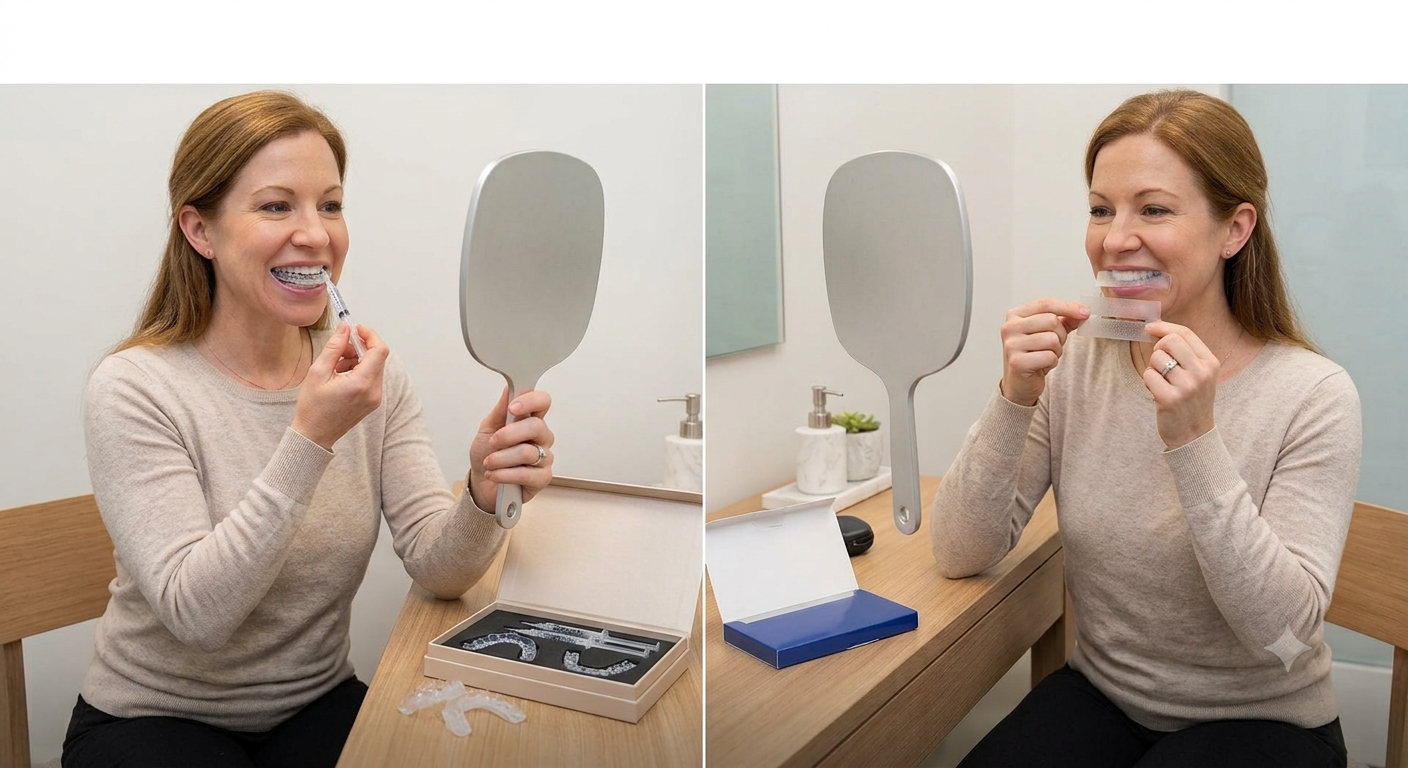
Your dentist takes impressions of your teeth and creates trays molded to your exact bite. You’re given a professional-grade bleaching gel to use at home — typically for a set period each day over one to two weeks.
Because the trays fit precisely, the gel stays in consistent contact with every tooth surface. There’s less chance of it leaking onto your gums, which reduces irritation. And since the gel concentration is still higher than anything OTC, results are noticeably better than strips.
Custom trays are a good fit if you want professional-level results on your own schedule, or if you’re looking for a maintenance option after an in-office treatment.
Over-the-Counter Strips
OTC whitening strips are the most accessible option — inexpensive, easy to find, and simple to use. For mild surface staining, they can make a visible difference.
The limitations are real, though. The bleaching agent is weaker, so results take longer and tend to be less dramatic. Strips don’t conform precisely to your teeth, so coverage can be uneven. If you have any crowding or overlapping, strips often miss the edges entirely.
They’re a reasonable starting point for someone with light staining who wants a low-commitment option. For anything beyond that, professional whitening will deliver better, more consistent results.
Side-by-Side Comparison Teeth Whitening in Troy
| In-Office Whitening | Custom Take-Home Trays | OTC Strips | |
|---|---|---|---|
| Speed of results | Fastest (single visit) | 1–2 weeks | Several weeks |
| Strength of gel | Highest | Professional grade | Lowest |
| Custom fit | Yes | Yes | No |
| Gum protection | Professionally applied | Tray minimizes contact | Minimal |
| Best for | Heavy staining, fast results | Gradual whitening, maintenance | Light staining, low commitment |
| Supervision | Full | Guided | None |
What Whitening Can’t Fix
Before investing in any whitening treatment, it’s worth being clear about where the limits are.
Dental restorations don’t whiten. Crowns, veneers, bonding, and tooth-colored fillings are made from materials that don’t respond to bleaching agents. If you have visible restorations on your front teeth, whitening your natural teeth could create a noticeable color mismatch.
Intrinsic staining has limits. Tetracycline staining and fluorosis are notoriously resistant to whitening. Some improvement may be possible, but results are often modest. In these cases, cosmetic options like veneers tend to be more effective.
Underlying dental issues come first. Whitening is a cosmetic procedure. If there’s active decay or gum disease, those need to be treated before any whitening begins. A dentist will check for this during your consultation.
Sensitivity doesn’t disqualify you — but it matters. Some people experience temporary tooth sensitivity during or after whitening. A dentist can recommend approaches that reduce discomfort, including lower-concentration options or desensitizing treatments.
Not sure whether whitening is the right move for your teeth? Schedule a consultation at Arch Dental and get a straight answer.
Why Troy Patients Choose Arch Dental for Teeth Whitening
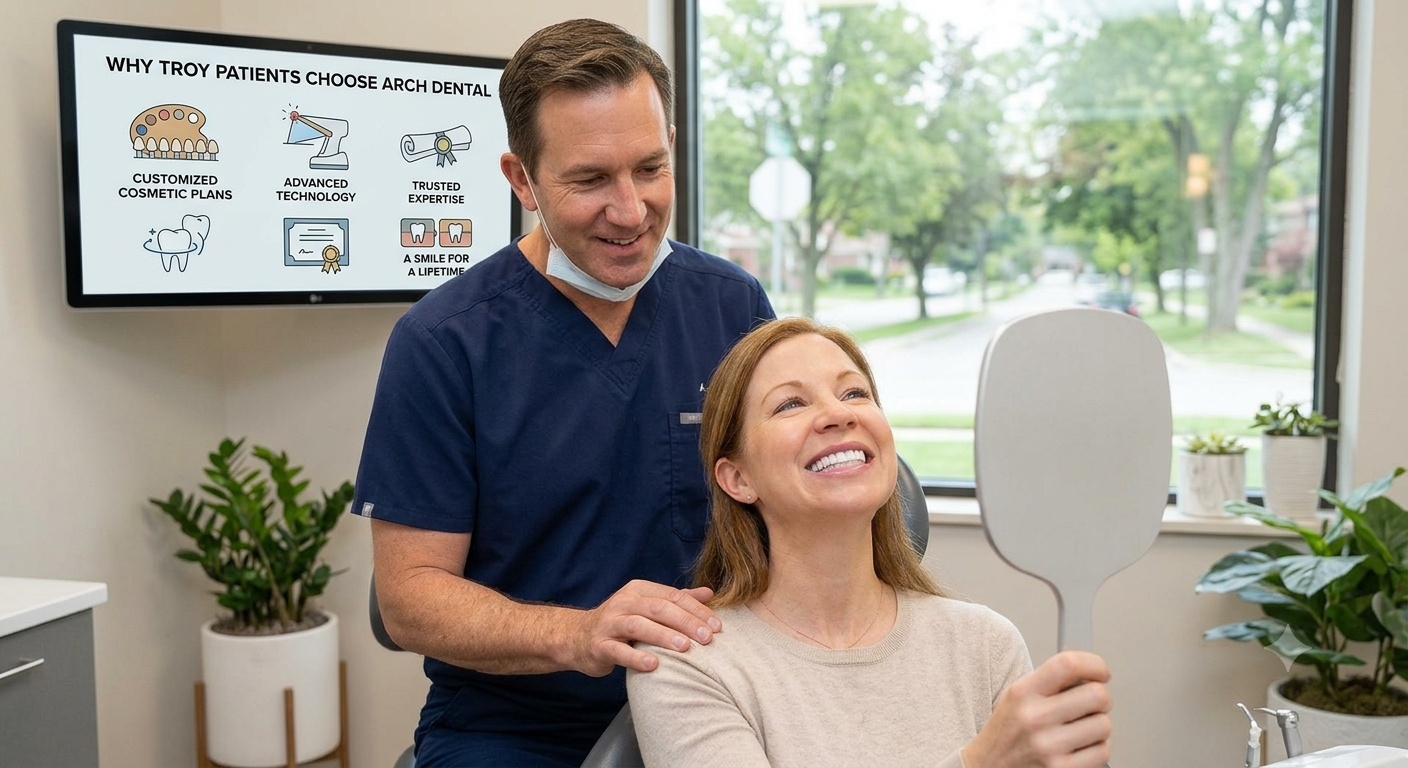
Arch Dental serves patients in Troy and throughout Oakland County, including Madison Heights, Oak Park, Hazel Park, Sterling Heights, and Royal Oak. Patients from nearby communities like Birmingham, Clawson, Rochester Hills, and Warren also find the practice easy to reach.
A few things consistently bring people to Arch Dental for whitening specifically.
Treatment that’s matched to your situation. Not every smile starts from the same place. Arch Dental assesses your specific type of discoloration, your dental health, and your goals before recommending an approach — so you’re getting a plan built around your teeth, not a generic protocol.
Cosmetic care under one roof. Whitening is often a starting point. For patients who want to go further, Arch Dental offers a full range of cosmetic services. If whitening alone won’t address what’s bothering you, there are other options worth discussing.
A comfortable, low-pressure experience. If dental anxiety has kept you away, Arch Dental’s focus on painless dentistry is worth knowing about. That applies to consultations too — you can come in to explore your options without any pressure to commit.
Clarity before you commit. A consultation tells you whether whitening is the right fit for your teeth, or whether a different cosmetic approach would serve you better. That kind of honest guidance is worth a lot before you spend time or money on something that may not deliver what you’re hoping for.
Take the Next Step For Teeth Whitening in Troy
If you’re in Troy, Madison Heights, or anywhere in the Oakland County area, getting started with Arch Dental is straightforward. Whether you’re seriously considering in-office whitening, curious about custom trays, or just not sure what your teeth actually need — a consultation is the right first move.
Book your appointment at Arch Dental and get a clear picture of your options. You can also learn more about cosmetic services at archdental.net.
Frequently Asked Questions
How long does professional teeth whitening last? Results vary depending on your diet, oral hygiene habits, and whether you use maintenance products. In-office whitening typically lasts anywhere from several months to a couple of years. Avoiding heavy staining foods and beverages and following your dentist’s recommendations helps extend those results.
Is teeth whitening safe for sensitive teeth? Many people with sensitive teeth can still whiten safely. A dentist can assess your sensitivity and recommend an approach that minimizes discomfort — such as a lower-concentration gel or a shorter treatment duration. It’s one of the reasons a professional consultation is worth having before you start.
Will whitening work on crowns, veneers, or fillings? No. Bleaching agents only affect natural tooth enamel. Restorations like crowns, veneers, and composite bonding won’t change color with whitening treatments. If you have visible restorations, your dentist will factor that into the treatment plan.
How many shades whiter can I expect? Results depend on the type and severity of your staining and the whitening method used. In-office professional whitening generally produces the most dramatic change. Your dentist can give you a realistic expectation based on your specific teeth during a consultation.
Do I need to do anything to prepare for a whitening appointment? Your teeth should generally be professionally cleaned before whitening so the bleaching agent can work on clean enamel. Your dentist will also check for any decay or gum issues that need to be addressed first. Beyond that, preparation is minimal.
How is professional whitening different from whitening toothpaste? Whitening toothpastes rely primarily on mild abrasives to remove surface staining. They don’t contain the bleaching agents found in professional or OTC whitening products, so they don’t change the underlying color of your enamel. They can help maintain results after whitening, but they won’t produce significant whitening on their own.
Can I whiten my teeth if I’m pregnant or breastfeeding? Most dental professionals recommend waiting until after pregnancy and breastfeeding before undergoing whitening treatments. If that applies to you, mention it during your consultation and your dentist will advise you on timing.
