
If you’re searching for dental crowns in Troy, MI, something specific probably brought you here — a cracked tooth that’s been nagging you, a cavity that’s grown too large for a simple filling, or a tooth you’ve wanted to fix for a while. Whatever the reason, this guide covers what a dental crown actually is, when one makes sense, and what the process looks like at Arch Dental, located in Madison Heights just minutes from Troy.
What Is a Dental Crown?
A dental crown is a cap that fits over an existing tooth, covering it completely from the gumline up. It restores the tooth’s shape, size, and strength — and depending on the material, it can also improve how the tooth looks.
Crowns come in several materials: porcelain, ceramic, metal, and combinations of these. The right choice depends on where the tooth sits in your mouth and what matters most to you. Your dentist will walk you through the options and help you decide what fits your situation best.
When Do You Actually Need a Crown?
Not every damaged tooth needs a crown, but there are several situations where it’s clearly the right call.
A Cracked or Fractured Tooth
A deep crack won’t heal on its own. It can cause sharp pain when you bite down and leave the inner structure of the tooth exposed to further damage. A crown holds the tooth together, distributes biting pressure more evenly, and keeps things from getting worse.
A Large Cavity
When decay has spread too far for a filling to handle reliably, a crown becomes the more durable solution. Rather than patching one section of the tooth, it covers the entire surface.
After a Root Canal
Root canal treatment removes the nerve and pulp from a tooth, which leaves the remaining structure more brittle than before. Placing a crown over that tooth protects it from cracking under normal chewing forces — especially on back teeth that take the most pressure.
Cosmetic Reshaping
Some patients choose crowns to address a tooth that’s severely discolored, significantly misshapen, or noticeably smaller than the teeth around it. In these cases, a crown restores both function and appearance at the same time.
Covering a Dental Implant
When a single-tooth implant is placed, the visible part — the piece you actually see and use — is a crown. It attaches to the implant post and looks and functions like a natural tooth.
Who Is a Good Candidate?
Most adults with a damaged or weakened tooth are reasonable candidates for a crown. A few factors help determine whether you’re ready to move forward.
You’re likely a good fit if:
- You have significant decay, a crack, or structural damage that a filling can’t adequately address
- You’ve recently had a root canal on a back tooth
- You want to improve the appearance of a tooth that’s discolored or misshapen
- You have an implant that needs a restoration on top
- The gum tissue around the tooth is healthy — or any gum concerns can be resolved first
If there are underlying issues like active gum disease or bone loss, those typically need to be treated before a crown is placed. The team at Arch Dental will evaluate your full oral health before making any recommendation, so you’re not building a restoration on an unstable foundation.
What to Expect at Arch Dental
Getting a crown at Arch Dental generally takes two appointments.
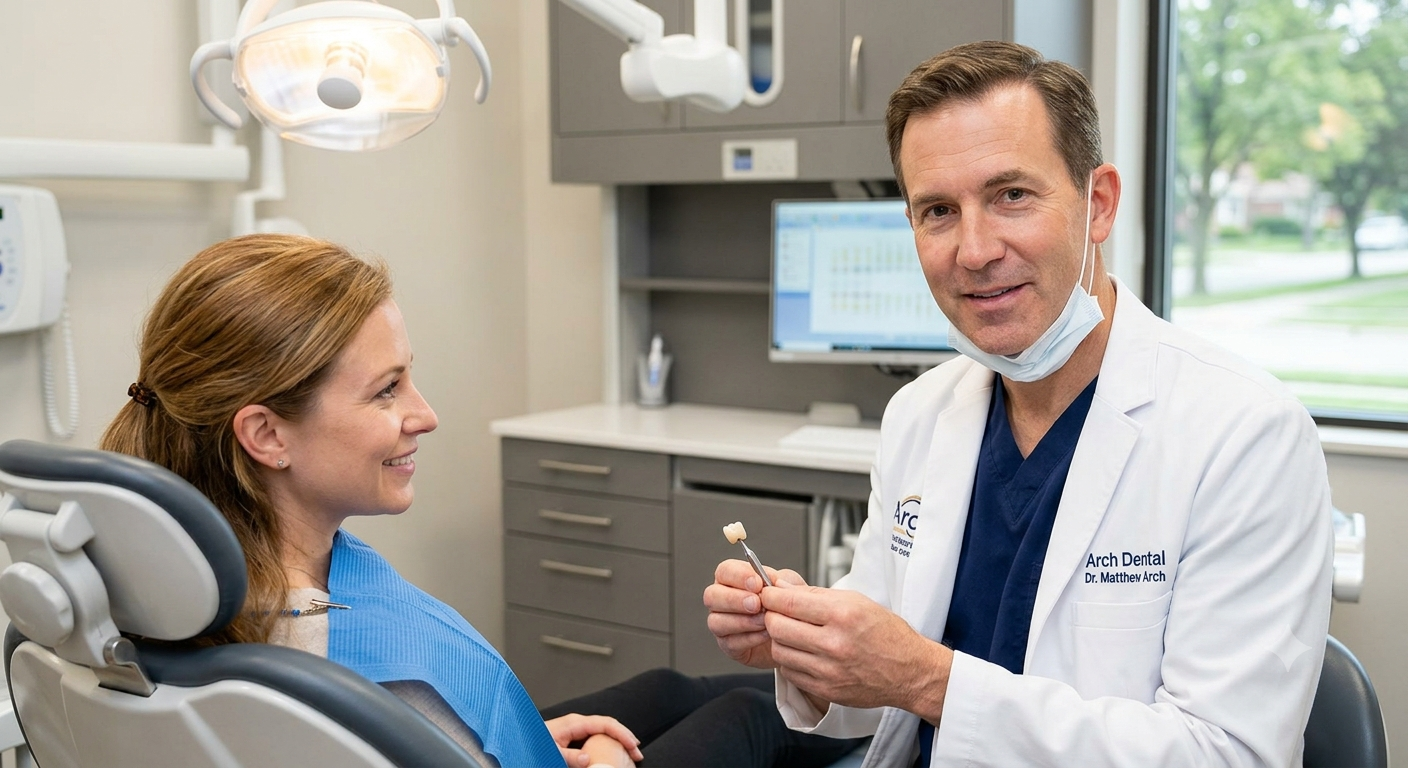
First Visit: Preparation and Temporary Crown
Your dentist will numb the area before anything else, so you stay comfortable throughout. The tooth is then shaped to create room for the crown to fit over it properly. Impressions or digital scans capture the exact dimensions of your tooth and the surrounding bite.
Before you leave, a temporary crown is placed to protect the prepared tooth while your permanent one is being made. Most patients find this appointment straightforward and are back to their normal routine the same day.
Second Visit: Final Placement
When your permanent crown is ready, you return for the final fitting. Your dentist checks the fit, bite alignment, and appearance before cementing it in place. Any minor adjustments are made at this visit to make sure everything feels right.
Arch Dental’s approach to care is built around making the experience as comfortable as possible. If you’ve had anxious experiences at the dentist before, it’s worth mentioning when you call — the team is used to working with patients who have concerns, and they’ll take that into account from the start.
Why Troy Patients Choose Arch Dental
Arch Dental is located in Madison Heights, which sits just a few minutes from Troy. For most Troy residents, it’s a straightforward trip down John R Road or I-75 — close enough that distance isn’t a factor.
A few things stand out for patients coming from the Troy area:
One practice for a range of needs. Beyond crowns, Arch Dental offers cosmetic dentistry, mini dental implants, All-on-X full arch implants, and dentures. If your dental situation involves more than a single crown, you can address everything in one place rather than being sent elsewhere.
Comfortable, patient-centered care. The practice is designed to feel less intimidating than a typical dental office. Whether you’re nervous about the prep process, haven’t been to the dentist in a while, or just want to know what to expect before you sit down, the team takes time to make sure you feel informed and at ease.
Advanced technology. Arch Dental uses modern diagnostic and treatment tools to improve accuracy and reduce surprises during treatment. The focus is on getting things right the first time.
Familiar with the area. In addition to Troy and Madison Heights, Arch Dental regularly sees patients from Royal Oak, Clawson, Birmingham, and surrounding communities. If you’re coming from any of these areas, you’re not far.
How Long Do Crowns Last?
A well-placed crown can last many years with proper care. The actual lifespan depends on the material, the location of the tooth, and how well you maintain it. Brushing, flossing, and keeping up with regular cleanings all make a meaningful difference.
Habits like grinding your teeth or chewing on hard objects can shorten a crown’s life. If you grind at night, your dentist may recommend a nightguard to protect both the crown and your surrounding teeth.
Ready to Find Out If a Crown Is Right for You?
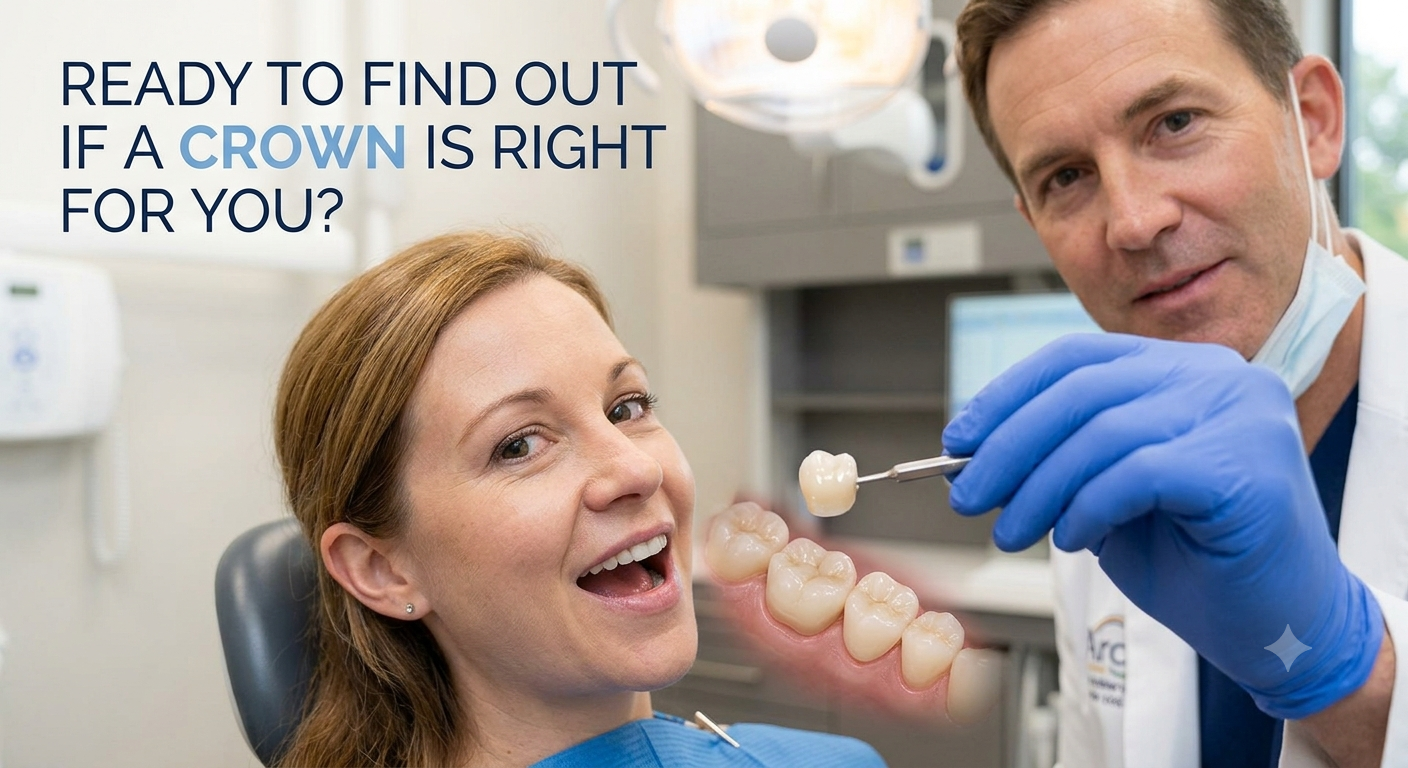
The most reliable way to know whether a crown makes sense for your tooth is to have it evaluated. At Arch Dental, consultations are available for new patients, and the team will give you a clear picture of your options — what a crown would involve, what it would cost, and whether there are alternatives worth considering.
Book an appointment at archdental.net/book-an-appointment
Frequently Asked Questions
Does getting a dental crown hurt?
The preparation appointment involves numbing the tooth and surrounding area, so you shouldn’t feel pain during the procedure. Some patients notice mild sensitivity or soreness near the gumline in the days after, but this typically fades within a week. If discomfort lingers or feels significant, reach out to your dentist.
How long does a dental crown last?
Most crowns last 10 to 15 years or longer, depending on the material, the tooth’s location, and how well you care for it. Porcelain and ceramic crowns on front teeth can last just as long as metal-based options when properly maintained.
How much does a dental crown cost in Troy, MI?
Crown costs vary based on the material, the complexity of the case, and your insurance coverage. Arch Dental recommends scheduling a consultation to get an accurate estimate for your specific situation. Many dental insurance plans cover a portion of crown costs when the crown is placed for restorative reasons.
What’s the difference between a porcelain crown and a metal crown?
Porcelain and ceramic crowns are made to match the color of your natural teeth, which makes them a common choice for front teeth and other visible areas. Metal crowns are extremely durable and often the better option for back molars where chewing forces are highest. Porcelain-fused-to-metal crowns offer a middle ground between aesthetics and strength. Your dentist will recommend the most appropriate type based on which tooth is being crowned and what matters most to you.
Can a crown fall off?
It’s uncommon, but it can happen — usually if the cement weakens over time or if new decay develops in the tooth underneath. If your crown feels loose or comes off, contact your dental office promptly. Don’t try to re-cement it yourself. In many cases, the crown can be re-attached if it’s still intact.
Do I need a crown after every root canal?
Not always. Front teeth sometimes don’t require a crown after a root canal because they experience less biting force. Back teeth — premolars and molars — almost always benefit from one, since they bear the brunt of chewing. Your dentist will assess the specific tooth and make a recommendation based on what it needs.
For the development and content team: Recommended schema markup includes Dentist/MedicalBusiness (with address, phone, and service area) and FAQPage for the FAQ section above. Suggested image alt text: “Dental crown procedure at Arch Dental in Madison Heights, serving Troy MI patients.” Internal link opportunities: Dental Crowns/Bridges service page, existing Madison Heights crowns article, General Dentistry page, and Cosmetic Dentistry page on archdental.net.
