
If you’ve been researching tooth replacement options, you’ve probably come across snap-on dentures and started wondering what they actually cost. The price range is wide, the insurance situation is murky, and most dental offices don’t post numbers online. This article breaks down what you can realistically expect to pay in 2026, what pushes the cost up or down, and how to make the whole thing more affordable.
What Are Snap-On Dentures?
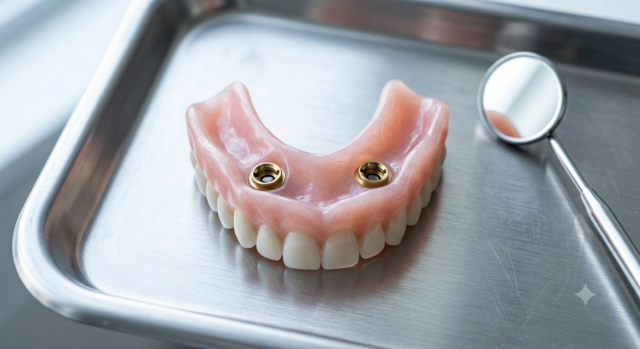
Snap-on dentures – also called implant-supported dentures or overdentures – are removable dentures that attach directly to dental implants placed in your jaw. Instead of resting on your gums with adhesive, they click onto the implants and stay firmly in place while you eat, talk, and go about your day.
You can take them out at home for cleaning, which makes maintenance simpler than with fixed implant bridges. But unlike traditional dentures, they don’t shift or slip because the implants are doing the anchoring.
The implants themselves are the biggest cost variable. More implants mean more stability – and a higher price. Fewer implants can still work well, particularly when mini dental implants are used.
Snap-On Dentures Cost in 2026
Pricing depends on the number of implants, the type of implants, the denture materials, and where you live. Here’s a general breakdown of what patients are seeing in 2026:
| Option | Estimated Cost Per Arch |
|---|---|
| 2-implant snap-on denture | $3,500 to $6,500 |
| 4-implant snap-on denture | $6,000 to $12,000 |
| Mini implant-supported denture | $2,500 to $5,500 |
| Both arches (upper and lower) | $7,000 to $22,000+ |
These are general market ranges. Your actual cost will depend on your clinical situation, how many implants your dentist recommends, whether any prep work is needed, and the specific materials used for your denture.
What Drives the Cost Up
Several factors push the total higher:
- More implants. Four implants per arch costs more than two, but typically delivers better stability and longevity.
- Bone grafting. If you’ve experienced bone loss, grafting may be needed before implants can be placed – and that adds to the total.
- Premium denture materials. Zirconia or high-grade acrylic options cost more than standard materials.
- Geographic location. Dental fees across Metro Detroit vary by neighborhood and practice.
- Preparatory procedures. Extractions, gum treatment, or other work required before implant placement all factor into the final number.
What Keeps the Cost Lower
Mini dental implants are a real option for patients who want implant-supported dentures without the higher price tag of standard implants. They’re narrower, require less bone volume, and involve a less invasive placement procedure. For patients who don’t qualify for standard implants due to bone loss, mini implants aren’t a compromise – they’re a clinically appropriate path that can make snap-on dentures accessible when the standard route isn’t viable.
At Arch Dental in Madison Heights, both mini and standard implants are available. Your dentist can recommend the right approach based on your bone structure and goals, not a one-size-fits-all protocol.
Does Dental Insurance Cover Snap-On Dentures?
The short answer: partially, sometimes.
Dental insurance rarely covers the full cost of implant-supported dentures, but it may contribute to certain components.
The denture portion is often at least partially covered. Most dental plans include some benefit for removable prosthetics – typically 50% after your deductible, up to your annual maximum. Annual maximums usually run $1,000 to $2,000, which doesn’t stretch far when total costs reach into the thousands.
The implant portion is where things get complicated. Many traditional dental plans classify implants as cosmetic or elective and exclude them entirely. Some newer or more comprehensive plans do include implant coverage, but often with waiting periods and sub-limits.
Bone grafting and extractions may fall under surgical benefits depending on your plan.
The practical move: call your insurance provider before your consultation and ask specifically about coverage for implant placement, bone grafting, and removable prosthetics. Get the answers in writing. Then bring that information to your appointment so your dental team can help you understand exactly what applies to your treatment.
Financing Options for Snap-On Dentures
Because the total cost often exceeds what insurance covers, most patients use some form of financing. Here are the most common options:
Dental financing plans. Companies like CareCredit and Lending Club Patient Solutions offer medical financing with promotional periods that may include deferred interest or low monthly payments. These are widely accepted at dental offices and can often be applied for the same day as your consultation.
In-office payment plans. Some practices offer their own payment arrangements. It’s worth asking directly when you come in.
HSA and FSA accounts. If you have a health savings account or flexible spending account through your employer, dental implants and dentures are qualifying expenses. Using pre-tax dollars can effectively reduce your out-of-pocket cost by 20 to 35 percent depending on your tax bracket.
Personal loans. A loan through your bank or credit union may carry a lower interest rate than dental financing, especially with good credit. Worth comparing before you commit to anything.
The smartest approach is to get a full treatment plan with itemized costs from your dentist, then weigh your financing options against what insurance will cover. That gives you a real number to work with.
Snap-On Dentures vs. Other Tooth Replacement Options
It helps to know where snap-on dentures fit relative to everything else.
Traditional dentures are the most affordable option upfront – typically $1,500 to $3,500 per arch – but they rest on the gums without implant support. They can shift, require adhesive, and don’t stimulate the jawbone, so bone loss continues over time.
Snap-on dentures cost more than traditional dentures but significantly less than fixed implant bridges. They offer the stability of implants with the convenience of being removable for cleaning.
All-on-X full arch implants – a full arch of permanent, non-removable teeth supported by implants – are the most stable and lifelike option available, but also the highest investment, typically starting at $20,000 or more per arch. For patients who want a fixed solution and qualify clinically, it’s worth discussing.
If you’re weighing these options and aren’t sure where you fall, a consultation is the most useful next step. Your bone density, how many teeth you’re missing, your health history, and your goals all shape which path makes the most sense.
What to Expect at Your Consultation
A good snap-on denture consultation covers more than just the price. Your dentist will review X-rays or a 3D scan of your jaw, assess your bone volume, discuss how many implants are appropriate, and walk you through the full treatment timeline.
You’ll also have the chance to ask about the procedure itself, recovery, and what day-to-day life looks like with implant-supported dentures.
At Arch Dental, painless dentistry is our standard – not something reserved for anxious patients. If you’ve been putting off dental care because of anxiety, that’s something we take seriously from the very first appointment. You can book a consultation directly at archdental.net/book-an-appointment.
We serve patients in Madison Heights, Troy, Oak Park, Hazel Park, Sterling Heights, and Royal Oak, MI.
Frequently Asked Questions
How much do snap-on dentures cost in 2026?
Costs generally range from $3,500 to $12,000 per arch for standard implant-supported snap-on dentures, depending on the number of implants, materials, and any preparatory procedures needed. Mini implant-supported options can start lower – around $2,500 per arch. A personalized treatment plan from your dentist is the only way to know your actual number.
Does insurance pay for snap-on dentures?
It may cover part of the cost. The denture itself is often partially covered under prosthetics benefits, but implant placement is excluded by many traditional plans. Some plans do include implant coverage. Check with your insurer before your consultation and ask specifically about implants, bone grafting, and removable prosthetics.
Are mini dental implants a good option for snap-on dentures?
For many patients, yes. Mini implants are narrower, require less bone volume, and involve a less invasive procedure than standard implants. They’re a clinically appropriate option for patients who don’t have sufficient bone for standard implants – not a lesser alternative. They also tend to cost less, which makes implant-supported dentures accessible to more people.
What’s the difference between snap-on dentures and All-on-X implants?
Snap-on dentures are removable. You take them out at home for cleaning, and they snap onto implants for stability throughout the day. All-on-X is a full arch of permanent, fixed teeth supported by implants – not removable at home, and generally a higher investment. Which option is right depends on your bone structure, goals, and budget.
Can I use my HSA or FSA for snap-on dentures?
Yes. Dental implants and dentures are qualifying medical expenses under both health savings accounts and flexible spending accounts. Using pre-tax dollars through either account can meaningfully reduce your effective out-of-pocket cost.
How long do snap-on dentures last?
The implants themselves can last many years with proper care. The denture portion typically needs replacement or adjustment every five to ten years due to normal wear and gradual changes in the gum and jaw. Regular dental visits help extend the life of both components.
What should I ask at my snap-on denture consultation?
Ask how many implants are recommended and why, whether you need any preparatory work like bone grafting or extractions, what the full itemized cost looks like, what financing options are available, and what the recovery timeline involves. A thorough consultation should answer all of this before you commit to anything.
Snap-on dentures offer a meaningful middle ground between traditional dentures and fully fixed implant bridges. The cost is real, but so are the financing tools available to make them work. If you’re in Madison Heights, Troy, or the surrounding Oakland County area and want to understand your options clearly, the best next step is a conversation with a dentist who can look at your specific situation.
Schedule your consultation at archdental.net and find out what’s right for your smile.
