
If you’ve been living with missing teeth or struggling with dentures that won’t stay put, you’ve probably come across implant-supported dentures as an alternative. But how do they actually stack up against traditional dentures when it comes to daily comfort, long-term cost, and fit that holds up over time?
Here’s an honest look at both options so you can walk into a consultation ready to ask the right questions.
What Are Traditional Dentures?
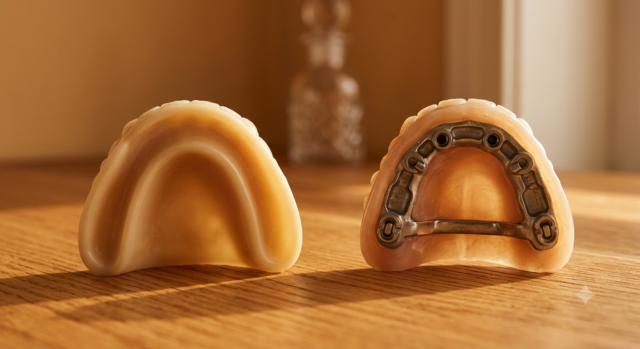
Traditional dentures are removable prosthetics that sit directly on your gums. They rely on suction, the natural contour of your gum ridge, and sometimes adhesive to stay in place. Full dentures replace an entire arch of teeth, while partials fill in gaps when some natural teeth remain.
They’ve been a go-to solution for tooth loss for decades – and for good reason. They’re accessible, don’t require surgery, and cost less upfront than implant-based options.
The Drawbacks You Don’t Always Hear About
The most common complaint among denture wearers is fit. Once teeth are gone, the jawbone begins to shrink – a process called bone resorption. As the bone changes shape, dentures that once fit well start to slip, rock, or create sore spots.
Over time, many people end up leaning heavily on adhesives, steering clear of certain foods, or feeling self-conscious mid-conversation. That’s not a flaw in the denture itself – it’s a natural consequence of how the jaw responds to tooth loss.
What Are Implant-Supported Dentures?
Implant-supported dentures attach to titanium implants placed directly into the jawbone. Those implants act like tooth roots, giving the denture a firm anchor point rather than just resting on the gum surface.
There are a few variations worth knowing:
- Snap-on overdentures: These clip onto two to four implants and can still be removed for cleaning. More stable than traditional dentures, but they do come out at night.
- Fixed implant dentures: Permanently secured to four or more implants and only removable by a dentist. All-on-4 and All-on-X restorations fall into this category.
- Mini dental implants: Smaller-diameter implants that support overdentures, typically with a less invasive placement process and a lower price point than standard implants.
At Arch Dental in Madison Heights and Troy, Michigan, patients can explore both mini dental implants and full arch All-on-X solutions based on their bone density, budget, and goals.
Stability: The Biggest Practical Difference
This is where implant-supported dentures pull ahead clearly. Because they anchor into bone, they don’t shift when you chew, laugh, or talk. No adhesive needed, and no second-guessing whether your denture will move at an inconvenient moment.
Traditional dentures – lower dentures especially – are notoriously harder to keep stable. The lower jaw offers less surface area for suction, and normal tongue movement tends to dislodge the denture throughout the day.
If stability is your top priority, implant-supported dentures are the more reliable choice.
Fit Over Time: How Each Option Ages
Traditional dentures need periodic relining as the jawbone continues to resorb. Without the stimulation that tooth roots provide, bone gradually shrinks, and the denture that fit well a few years ago will eventually need adjustments – or full replacement – to stay functional.
Implant-supported dentures slow that process considerably. The implants stimulate the jawbone the way natural roots do, helping preserve bone volume and keeping the fit more consistent over time. Fewer adjustment visits, and a longer useful life overall.
For anyone looking for a longer-term solution with less ongoing maintenance, implant-supported dentures hold their fit better as the years go on.
Cost: Upfront vs. Long-Term
This is where the comparison gets more nuanced.
Traditional dentures cost less upfront – often significantly less than a single implant, let alone a full arch restoration. For patients working within a tight budget, that accessibility matters.
Implant-supported dentures require a larger initial investment. The total depends on how many implants are placed, the type of restoration, and any prep work like extractions or bone grafting. Mini dental implants offer a middle-ground option that’s more affordable than standard implants while still providing meaningful stability.
That said, when you factor in the ongoing costs of relining, adhesives, and eventual replacement of traditional dentures, the long-term gap narrows. Implant-supported dentures tend to last longer and need fewer adjustments, which changes the math considerably over a decade or more.
The better question isn’t just what you pay at the start – it’s what you pay over five or ten years.
Comfort and Daily Life
People who switch from traditional dentures to implant-supported ones tend to describe the difference as night and day. No adhesive taste, no anxiety about the denture shifting mid-sentence, and a much more natural feel when eating.
Traditional dentures can cause gum soreness, particularly when they slip. Hard or sticky foods often become things to avoid rather than enjoy. Some wearers develop recurring sore spots that require repeated adjustments.
With implant-supported dentures, bite force is closer to what you’d get with natural teeth. That means a wider range of foods is back on the table – which has real benefits for nutrition and overall quality of life.
Who Is a Good Candidate for Each?
Not everyone qualifies for implant-supported dentures right away. Placement requires adequate bone density to hold the implants. Patients who’ve been without teeth for a long time may have experienced enough bone loss to need a graft before implants can be placed.
Good candidates for implant-supported dentures generally:
- Have sufficient jawbone density, or are open to grafting
- Are in good overall health
- Don’t smoke – or are willing to quit, since smoking affects how well implants integrate
- Want a stable, long-term solution
Traditional dentures are often the better fit for patients who:
- Need a faster or more affordable path forward
- Have significant bone loss that complicates implant placement
- Have health conditions that make surgery inadvisable
A proper evaluation is the only way to know which option suits your specific anatomy and health history.
Making the Decision
There’s no universal right answer here. The best choice depends on your bone health, budget, lifestyle, and how much stability matters to you on a daily basis.
If you’re in the Madison Heights or Troy area and want a clear picture of your options, Arch Dental offers consultations where you can talk through both approaches with a dentist experienced in mini implants, All-on-X full arch restorations, and conventional dentures. Visit archdental.net to learn more or schedule a visit.
Frequently Asked Questions
What is the main difference between implant-supported dentures and traditional dentures?
Traditional dentures rest on the gums and rely on suction or adhesive to stay in place. Implant-supported dentures attach to titanium implants in the jawbone, giving them a stable anchor that doesn’t shift during eating or speaking.
Are implant-supported dentures removable?
It depends on the type. Snap-on overdentures can be removed for cleaning. Fixed implant dentures – like All-on-4 or All-on-X restorations – are permanently attached and can only be removed by a dentist.
How much more do implant-supported dentures cost than traditional dentures?
Upfront, the difference is significant. But traditional dentures come with ongoing costs for relining, adhesives, and eventual replacement. Over a decade, the total gap is often smaller than the initial price difference suggests. Mini dental implants are worth discussing if cost is a concern.
Do implant-supported dentures prevent bone loss?
Yes. The implants stimulate the jawbone similarly to natural tooth roots, which slows the bone resorption that typically follows tooth loss. Traditional dentures don’t provide that stimulation, so bone loss continues over time.
How long do implant-supported dentures last?
The implants themselves can last many years with proper care. The denture portion may need replacement after ten to fifteen years depending on wear and oral hygiene habits, though this varies by patient.
What if I don’t have enough bone for implants?
Patients with bone loss may still be candidates after a bone grafting procedure, which adds volume back to the jaw. Your dentist can assess your bone density and determine whether grafting makes sense before moving forward.
Can I get implant-supported dentures if I already wear traditional dentures?
In many cases, yes. Existing denture wearers who want more stability often transition to implant-supported options. A dental evaluation will determine whether your current bone density supports implant placement or whether some preparation is needed first.
