
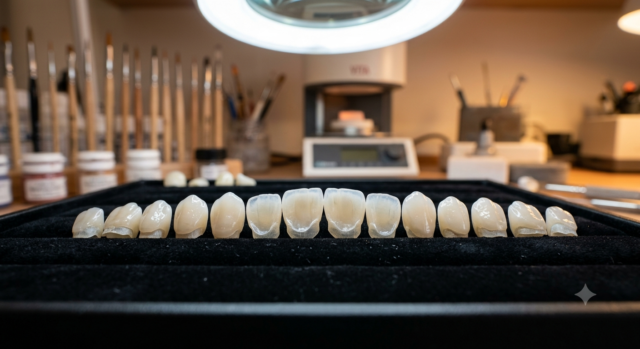
If you’ve been researching veneers, you’ve probably noticed the pricing looks wildly inconsistent. One source says $500 per tooth, another says $2,500. The reality is that veneer costs vary quite a bit depending on the material, how many teeth you’re treating, and where you go. This guide breaks it all down so you know what to expect before you ever sit in the chair.
What Are Veneers?
Veneers are thin shells – usually porcelain or composite resin – that bond to the front surface of your teeth. They’re used to improve the look of teeth that are chipped, stained, uneven, or slightly out of alignment. A veneer doesn’t replace a tooth. It covers it, giving you a more uniform, natural-looking smile without major dental work.
For adults who want a noticeable improvement without orthodontics or more invasive procedures, veneers are one of the most popular cosmetic options available.
Veneer Cost in 2026: What You Can Expect to Pay
Pricing depends on material, the number of teeth involved, and the dentist’s experience and location. Here’s what the general ranges look like in 2026.
Porcelain Veneers
Porcelain is the most common choice for smile makeovers. It’s durable, stain-resistant, and looks remarkably close to natural tooth enamel.
- Per tooth: $900 to $2,500
- Full smile (8 to 10 teeth): $7,200 to $25,000
Porcelain veneers typically last 10 to 20 years with proper care. The higher price reflects the lab fabrication process, custom shade matching, and the skill required to place them well.
Composite Veneers
Composite resin veneers are applied directly to the tooth in a single visit. They cost less, but they don’t last as long and are more prone to staining over time.
- Per tooth: $250 to $1,500
- Full smile (8 to 10 teeth): $2,000 to $15,000
Composite veneers can be a reasonable starting point if you want to see what a smile change looks like before committing to porcelain. They’re also easier to repair if chipped.
No-Prep Veneers
No-prep veneers – sometimes called minimal-prep veneers – require little to no removal of existing enamel. They tend to run slightly thicker than traditional porcelain veneers and work best for specific cases.
- Per tooth: $800 to $2,000
Not every patient qualifies. Your dentist will evaluate your bite, existing tooth structure, and goals before recommending this route.
What Actually Drives the Price Difference?
Knowing what affects cost helps you compare quotes more accurately.
Material quality. Porcelain fabricated at a high-quality dental lab costs more than composite resin mixed chairside. The material affects both how the veneer looks and how long it lasts.
Number of teeth. Most patients veneer between 6 and 10 teeth to cover the full visible smile. More teeth means a higher total, though some practices offer per-case pricing for larger treatment plans.
Prep work required. If you need whitening, minor reshaping, or gum contouring before veneers can be placed, those services add to the overall cost.
Dentist experience. A cosmetic dentist with advanced training and a strong portfolio of smile makeovers may charge more than a general dentist who does occasional veneers. That experience tends to show in the final result.
Location. Practices in major metro areas typically charge more than suburban or smaller-market offices. In Southeast Michigan – including Madison Heights and Troy – pricing tends to be more accessible than in larger urban centers.
Does Dental Insurance Cover Veneers?
In most cases, no. Veneers are classified as cosmetic, so standard dental insurance plans don’t cover them. There are narrow exceptions – such as when a veneer restores a tooth damaged by trauma – but those situations are uncommon.
What insurance may cover is preparatory work, like treating decay or a cracked tooth before the veneer goes on. It’s worth reviewing your plan’s specifics before your consultation.
Many practices also offer financing or payment plans that spread the cost over several months, which makes veneers more manageable for patients paying out of pocket.
Veneers vs. Other Cosmetic Options
Not sure veneers are the right fit? Here’s how they stack up against a few common alternatives:
| Treatment | Cost Range (Per Tooth) | Durability | Best For |
|---|---|---|---|
| Porcelain veneers | $900 to $2,500 | 10 to 20 years | Staining, chips, shape changes |
| Composite bonding | $200 to $800 | 3 to 7 years | Minor chips, small gaps |
| Teeth whitening | $300 to $800 total | 1 to 3 years | Staining only |
| Dental crowns | $1,000 to $2,500 | 10 to 15 years | Severely damaged teeth |
Veneers sit in the middle of the cosmetic spectrum. They deliver more dramatic, longer-lasting results than whitening or bonding, but they’re less invasive than a crown, which covers the entire tooth.
How Many Veneers Do You Actually Need?
This comes up constantly. The answer depends on your goals and which teeth are visible when you smile naturally.
Most patients veneer the upper front 6 to 8 teeth. Some go up to 10 to include the premolars that show in a wide smile. Treating fewer than 4 teeth can sometimes create a visible mismatch between veneered and natural teeth, so your dentist will guide you toward what looks balanced for your face and bite.
You don’t need to veneer every tooth. A skilled cosmetic dentist can match new veneers closely to your natural teeth when treating just a few.
Getting Veneers in Madison Heights or Troy, MI
If you’re based in Madison Heights, Troy, or the surrounding Oakland County area, the consultation is where your pricing conversation starts. No reputable practice will give you a final number without examining your teeth, reviewing X-rays, and understanding what you’re trying to achieve.
At Arch Dental, veneers are part of a full cosmetic dentistry menu that includes smile makeovers, teeth whitening, and dental bonding. The practice serves patients in Madison Heights and Troy, and painless dentistry isn’t a tagline – it’s the standard every patient experiences from the first visit forward.
Your new smile starts with one conversation. Book a consultation at archdental.net to find out which type of veneer fits your situation and get a clear picture of what treatment would actually involve for you.
FAQs
How much do veneers cost per tooth in 2026?
Porcelain veneers typically range from $900 to $2,500 per tooth. Composite veneers are less expensive, usually $250 to $1,500 per tooth. The exact cost depends on the material, the dentist’s experience, and how much prep work your teeth need beforehand.
Are veneers covered by dental insurance?
Most plans don’t cover veneers because they’re classified as cosmetic. Exceptions exist when a veneer restores a tooth damaged by injury. Preparatory treatments like decay removal may be covered separately under your plan.
How long do veneers last?
Porcelain veneers typically last 10 to 20 years with good oral hygiene and regular dental visits. Composite veneers last 3 to 7 years. Avoiding habits like nail-biting, chewing ice, or grinding your teeth helps extend their lifespan considerably.
Do veneers hurt?
The placement process involves some enamel removal and bonding, but most patients experience minimal discomfort. Local anesthesia is used during prep, and any sensitivity after placement usually fades within a few days.
Can I get veneers on just a few teeth?
Yes, though your dentist will assess whether treating a small number of teeth will look natural alongside your existing smile. In many cases, treating 6 to 8 teeth produces a more balanced result than veneering just 1 or 2.
What’s the difference between veneers and dental bonding?
Bonding uses composite resin applied directly to the tooth to fix minor chips, gaps, or discoloration. It’s less expensive and requires no lab work, but it doesn’t last as long and isn’t as stain-resistant as porcelain. Bonding works well for small corrections; veneers are the better choice for a full smile transformation.
How do I know if I’m a good candidate for veneers?
Good candidates have healthy teeth and gums, enough enamel for the veneer to bond to, and realistic expectations about the outcome. Significant decay, gum disease, or heavy grinding may need to be addressed first. A consultation is the only way to know for certain.
The price range for veneers in 2026 is wide enough that the numbers alone don’t tell you much. What matters is finding a dentist you trust, understanding which type of veneer fits your teeth and goals, and getting a clear treatment plan before committing. If you’re in the Madison Heights or Troy area, schedule a consultation at archdental.net and get the specific answers your smile deserves.
